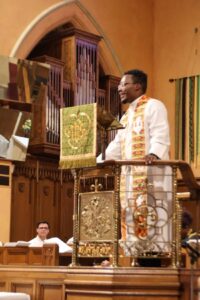
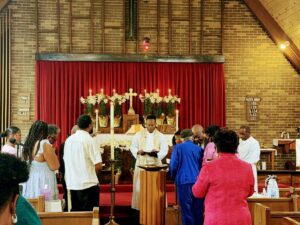
On a day filled with joy, reflection, gratitude, and hope, Eden Theological Seminary celebrated the achievements of the Class of 2026 during its 176th Commencement Ceremony.

Family members, friends, faculty, staff, alumni, and supporters gathered to honor a remarkable group of graduates who have spent years preparing themselves for lives of leadership, service, ministry, scholarship, and community transformation. As graduates crossed the stage, they carried with them not only degrees, but also a deep commitment to building a more just, compassionate, and hopeful world.

Commencement at Eden is always more than a ceremony.

It is a sacred moment that marks both an ending and a beginning.

Throughout their time at Eden, graduates have wrestled with challenging questions, expanded their understanding of faith and leadership, engaged diverse perspectives, and learned what it means to lead faithfully in a rapidly changing world. They now leave equipped to serve congregations, nonprofit organizations, community movements, educational institutions, and countless other spaces where courageous leadership is needed.

The ceremony featured inspiring words from faculty and leadership, reminding graduates that theological education is not simply about acquiring knowledge. It is about becoming people who are prepared to meet the moment, to listen deeply, act courageously, and serve with integrity.

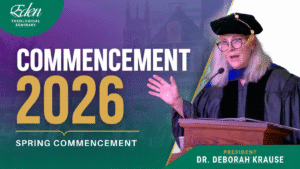
Eden President Dr. Deborah Krause challenged graduates to embrace the responsibility and privilege of leadership in a world hungry for hope, justice, and compassion. Her remarks reflected Eden’s enduring commitment to preparing leaders who are grounded in faith while boldly engage in the realities of today’s world. Click to see her full speech.

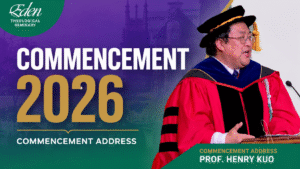
Commencement speaker Dr. Henry Kuo offered wisdom and encouragement rooted in the transformative power of education, community, and lifelong learning. His message reminded graduates that leadership is not measured by titles or accomplishments alone, but by the ways we accompany others, seek truth, and contribute to the flourishing of our communities. Click to see his full speech.

As degrees were awarded, there was a shared sense of gratitude for the journeys that brought each graduate to this milestone. Many balanced coursework with careers, family responsibilities, ministry commitments, and service to their communities. Their perseverance and dedication are a testament to the strength of the Eden community.

The Class of 2026 now joins generations of Eden alumni who are serving throughout the world as pastors, chaplains, organizers, educators, nonprofit leaders, advocates, and change-makers. Their work will continue Eden’s legacy of radical hospitality, justice-centered leadership, and transformative ministry.

As we celebrate this year’s graduates, we are reminded that the future is shaped by people willing to answer the call.

Today, we celebrate those who have done just that.

Congratulations, Class of 2026.

The world needs your leadership. The church needs your voice. Our communities need your courage.

Go forth and continue meeting the moment.

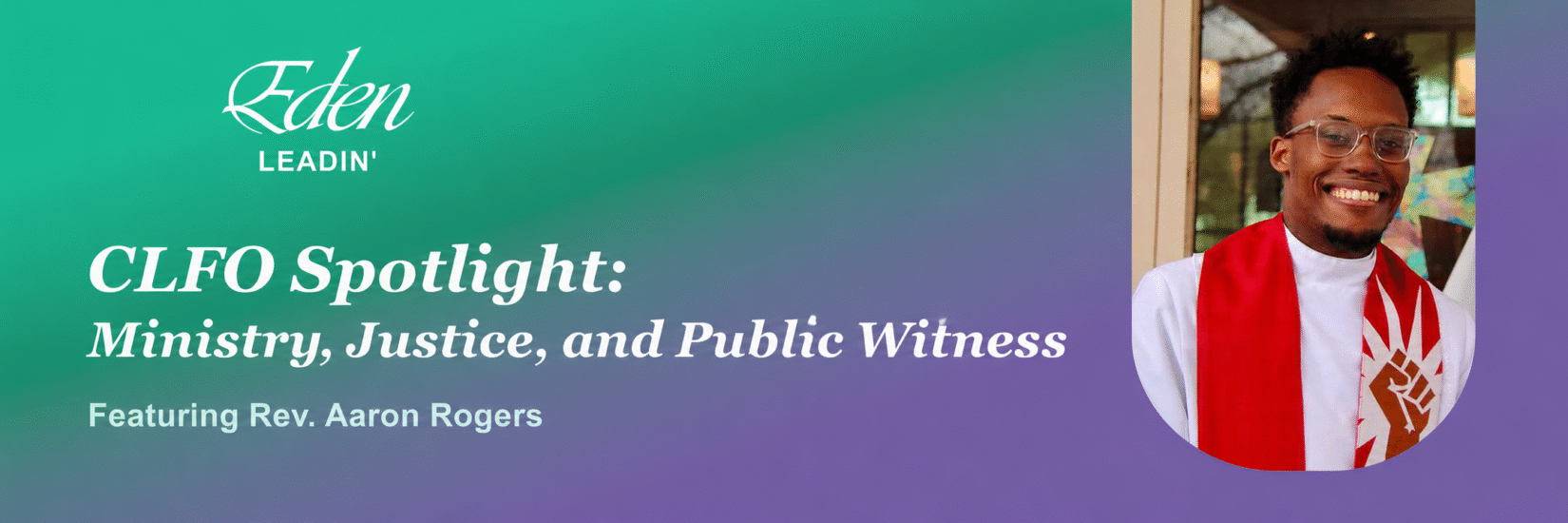
Meet Rev. Aaron Rogers
If you ask Rev. Aaron Rogers about his ministry, he will tell you that it begins long before ordination or Seminary. It begins with movement, resilience, and the faith traditions carried by Black families seeking freedom, dignity, and opportunity. Raised in East St. Louis, Illinois, Aaron’s spiritual roots are grounded in the witness of African Americans who journeyed North to escape racial violence and oppression in the South. His home church, Pilgrim Temple CME Church, was founded by Black families who carried their faith with them as they built new lives in East St. Louis. “They called it Pilgrim Temple because their story was one of movement, journey, and transformation,” Aaron shared.
An Eden Experience Rooted in Leadership and Formation

Aaron graduated from Eden Theological Seminary in 2012 with a Master of Divinity degree. During his time at Eden, he served as co-president of AASEND and co-president of the Student Body. He was also recognized as a Juried Paper winner, served as a teaching assistant for African American Religious History, and received the student award for Biblical Interpretation.

Eden introduced Aaron to faith-based organizing while he was still a seminarian, an experience that would continue shaping his ministry long after graduation. “Eden has a great legacy of preparing ministry leaders in the church with practical and essential skills for ministry,” he said.

Leading Black Ministries and Justice Work
Today, Aaron serves as an Episcopal priest in the Episcopal Diocese of Southern Ohio as the Missioner for Black Ministries. In this role, he supports more than 70 churches throughout the diocese while also helping guide ministry initiatives focused on reparations, racial healing, and justice work.

A unique part of his ministry is supporting the legacy and ongoing ministry of four historically Black parishes in the Diocese of Southern Ohio. His work blends pastoral leadership, justice advocacy, relationship-building, and public theology in ways that deeply connect faith to community life.
Returning to Eden Through CLFO

When Aaron registered in the Eden Theological Seminary Center for Lived Faith and Organizing (CLFO), he saw it as an opportunity to sharpen and renew skills he had already been developing in ministry. He was especially drawn to the theological grounding of the program and the strength of its facilitators.

“While I’ve had organizing training before, I especially appreciated that the theological nature of the work was explicit,” Aaron said. “Because the audience was made up of people with actual ministry contexts, it created a much richer experience of integrating theology and practice.”

Finding Community and Courage

For Aaron, one of the most meaningful parts of the experience was the relationships built throughout the program. He described the cohort experience as sustaining and energizing.

“The biggest impact for me was getting to meet a whole new group of friends and collaborators who help me feel sustained and supported in this work,” he shared. “I look forward to the ways we’ll continue partnering and sharing resources moving forward.”

One session in particular deeply challenged him: a workshop focused on abortion rights. While Aaron already privately supported abortion rights, the workshop challenged him to consider what it meant to become a more public advocate.

“I really appreciated that challenge,” he reflected.

Theology That Touches the Ground

Throughout the CLFO experience, Aaron found himself continually returning to one central conviction: theology must remain connected to real people and real contexts.

“I left wanting to have a ministry that touched the ground as much as it touched heaven,” he said.

The certificate workshops reminded him that justice work is not separate from discipleship, but an essential part of Christian witness. He also found himself becoming more deliberate about how he engages community life.

“My community is not just something on the way to church,” Aaron explained. “It is a spiritual resource that invites me to deepen my faith and discipleship every day.”

A Ministry Shaped by Public Witness

Aaron shared that the training helped deepen both the clarity and boldness of his public theology. He left the program feeling more equipped to speak faithfully and publicly about justice issues connected to the Gospel.

“I understand now why explicitly expressing theology in the public sphere is critically important to Christian witness,” he said.

As he prepared to begin ministry in a new state and context, the organizing work from CLFO provided practical tools for relationship-building and community engagement. He especially valued having Rev. Dr. Dietra Wise-Baker as a thought partner throughout the process.

An Invitation to Engage

When asked what advice he would give future participants, Aaron encouraged people to enter the experience expecting transformation.

“Come with an expectation of engagement,” he said. “Seek to learn and be transformed by what you are hearing.”

He also encourages participants to attend in person whenever possible, emphasizing the value of learning in community.

For Aaron, the CLFO experience continues to shape his ministry and his commitment to justice-centered discipleship. He hopes to invite more colleagues into the program so they can discover practical ways to connect faith, organizing, and public witness within their own ministry contexts.

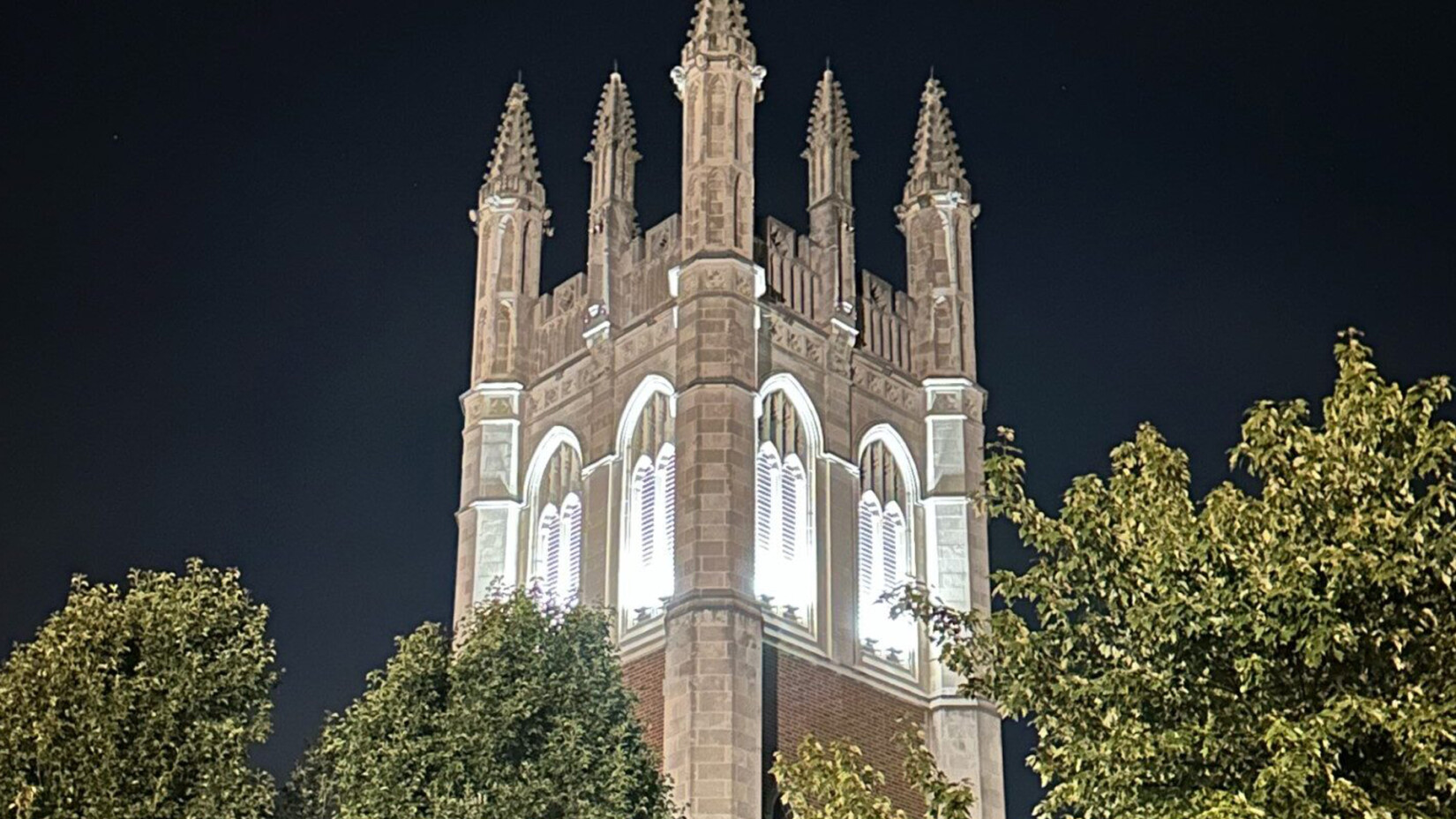
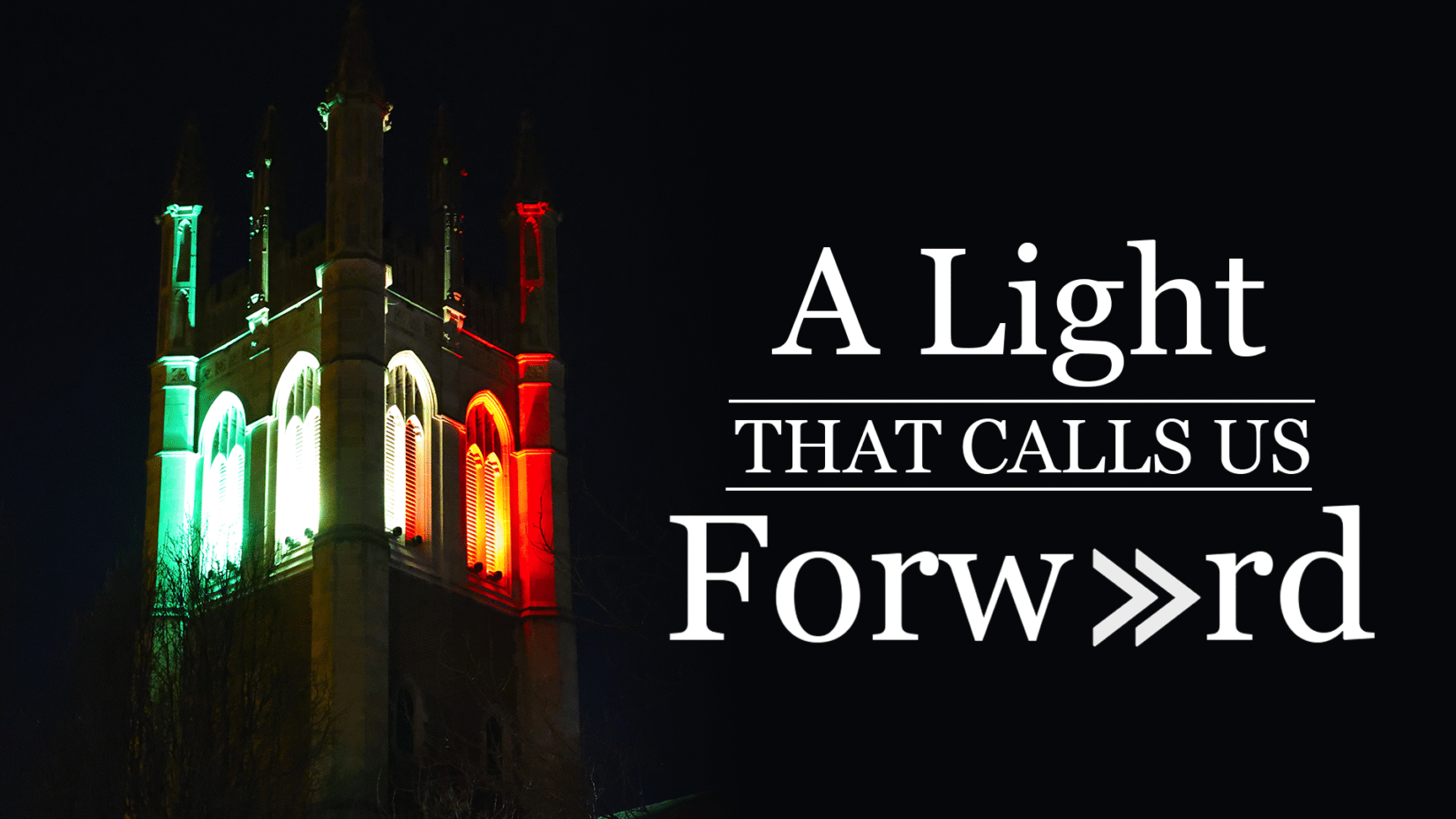
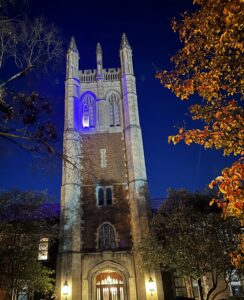
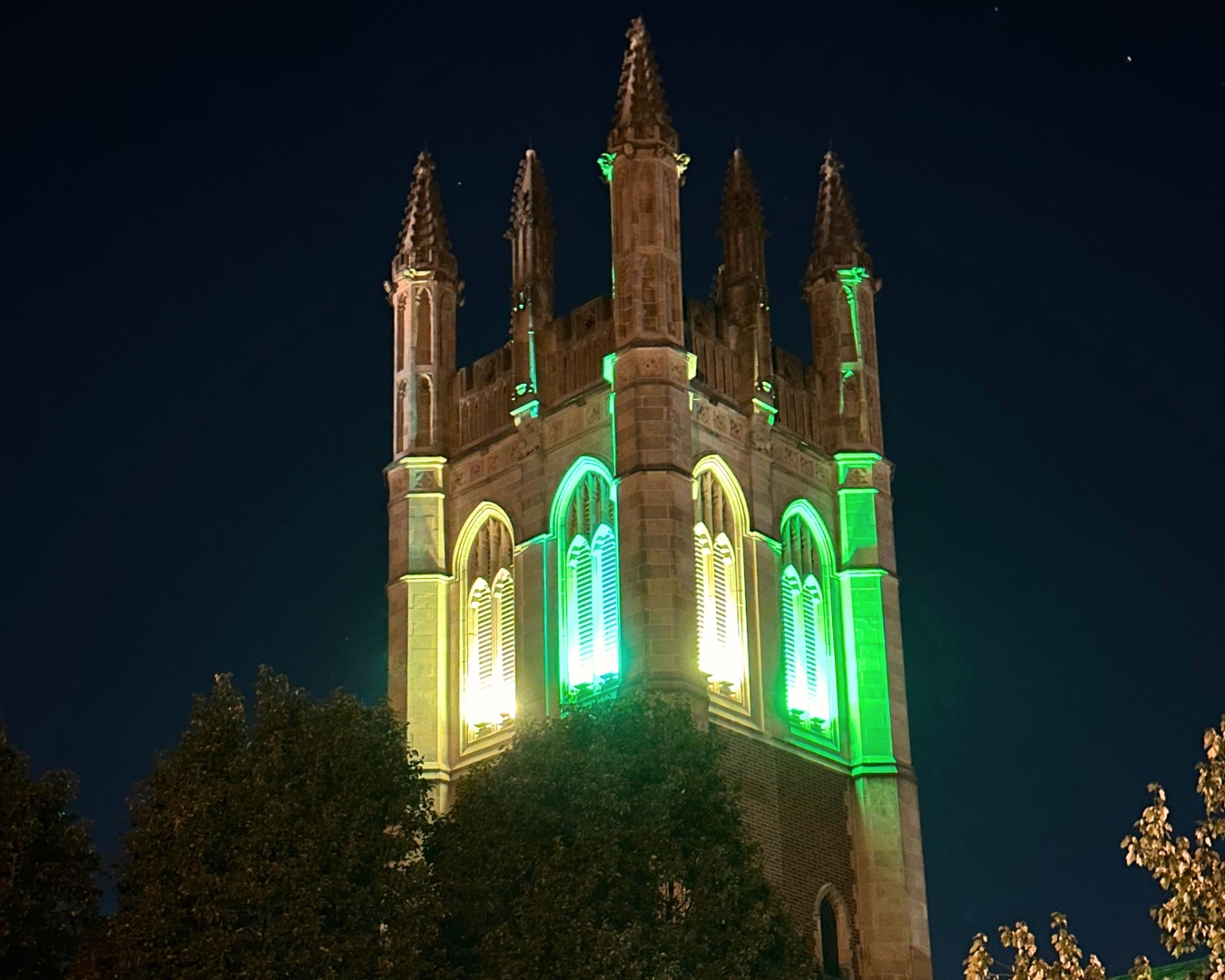
It’s Holy Week in the western Christian Calendar. Eden’s Press Hall tower lights commemorate and celebrate the season.  We invite you on the journey with us.
The Tower is lit on Wednesday, April 1 in solidarity with Jewish Passover.
Maundy Thursday, on April 2nd , commemorates Jesus washing the feet of his disciples in service and Jesus’ Last Supper in which Christians root Holy Communion. “Maundy” signifies Jesus’ new commandment to “love one another.”
The tower lights will be dark on Good Friday, April 3 and Holy Saturday, April 4 in observance of Jesus’ crucifixion.
We celebrate resurrection on Easter Sunday, April 5 with white lights. “Christ is risen, indeed”
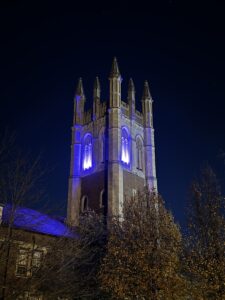
At Eden Theological Seminary, the Press Hall tower stands as more than a landmark. It is a witness, a quiet but steady sign of our presence, our faith, and our calling in the world. This February, the tower shines again but this time in honor of Black History Month.
We light the tower to remember.
To honor the faith, resilience, creativity, and leadership of Black communities whose stories are inseparable from the story of the Church in America.
To acknowledge the generations who carried hope when hope was denied, who preached peace in the face of violence, who sang joy through sorrow, and who embodied love amid injustice.
Black history is sacred history. It is woven into the life of the Church, into movements for freedom and dignity, into hymns, sermons, organizing, and everyday acts of faithful courage. It is a history that reminds us that theology is not only written in books, but lived out in bodies, communities, and collective struggle.
As a seminary committed to justice-rooted theological education, Eden Theological Seminary lights the tower as an act of witness, gratitude, and as a call. A call to tell the truth about the past. A call to listen deeply. A call to form leaders who understand that faith and justice cannot be separated.
The light on the tower does not end with remembrance. It points forward, toward our beloved community, toward liberation, toward a Church that reflects God’s radical love for all people.
May this light remind us that hope still shines.
That peace is still possible.
That joy is resilient.
And that love, rooted in justice endures.
We invite you to look up, reflect, and join us as the tower bears witness this Black History Month.

Hope, Peace, Joy, and Love be with you now and always.


Meet Rev. Gabrielle Kennedy

If you had told Rev. Kennedy twenty years ago that she would answer a call to ministry, go to Seminary, and become a faith leader in her own right, she would have laughed in your face. But that was just what happened, one step at a time. 


A Lay Leader In Every Sense of the Word

After 25 years growing her career and raising her family in Kansas City, Gabrielle returned home to St. Louis, where she was born and raised. Little did she know that something unexpected was waiting for her in St. Louis: Her call to ministry. 

Looking back, maybe she shouldn’t have been so surprised. A helper by nature, Gabrielle was always deeply involved in her church. She grew up in the Lutheran Church Missouri Synod – conservative and very white. It wasn’t until she was in college when a friend invited her to join a Sunday worship at an African Methodist Epsicopal (AME) Church that she truly experienced Black ministry in its full power, with a woman preacher at the helm. It was an extraordinary experience, and Gabrielle has been AME ever since.

At her congregation in Kansas City, Gabrielle did “everything a good AME could do”: choir, serving on the finance committee, working with church youth, and teaching Sunday school. 

“The period of my lay ministry laid the groundwork to open me up to hear my call. But I wasn’t open to Seminary yet.” – Gabrielle Kennedy. 

Instead, she got her MBA, and began to build a career in nonprofit management. 


“Facing the Conversations I Was Having with God” 
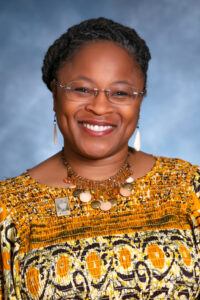
 

Upon arriving in St. Louis, Gabrielle joined Ward Chapel, an AME church in Florissant, which was at the time headed by Rev. Dr. Karen Anderson. She continued to participate in lay ministry in the Young People & Children’s Division, but this time was different. Rev. Anderson was a pastor who had a real heart for God’s people, and took an interest in developing their leadership within the church. 

“Rev. Karen and others saw my call before I did. She encouraged me to live it out in places where my gifts made room for me to grow in my formation, and accept the conversations I was having with God. That began to prepare my heart for the move that God was making in my life.” – Gabrielle Kennedy. 

For Gabrielle, saying yes to her call happened in stages. It was all well and good when it was just between her and God, but the stirrings of her call escaped into the world, and she knew she had to face it. She answered each step of her call one at a time, not always ready to accept what was coming next. The Board of Examiners, Seminary, Pastoring. Each came in their own time. 

“Things were happening so fast there were times when I was praying for a plateau. That continues to this day, but now I’m not so foolish. I know that there are ebbs and flows to this thing and I’m grateful for that.” – Gabrielle Kennedy


Belonging at Eden 

When it finally became clear to Gabrielle that Seminary was in her future, the choice to go to Eden came easily. Eden was recommended to Gabrielle by leaders including Rev. Dr. Anderson and Rev. Traci Blackmon. And when she arrived at Eden, her choice was affirmed time and time again. 

“In those first days of orientation, I was almost mad at myself, like ‘this is where you were supposed to be the whole time!’ I said to my pastor, ‘I just don’t understand why it took me so long.’ But Rev. Karen said, ‘What I’ve come to learn is that God calls who’s needed in the moment. Maybe God needed someone more seasoned in life for such a time as this.’” – Gabrielle Kennedy 

It was the fall of 2016, and in Eden’s hallways and classrooms, Gabrielle saw faces like hers. On the tails of Ferguson, St. Louis was witnessing a pivotal moment in history. Many folks who had been on the frontlines of the response in Ferguson, making sure that churches were supporting the community, were now entering or graduating from Seminary at Eden. 

“I felt like I was part of a wave of a development for social justice to show up aligned with the word of God. I wanted to be immersed in the process.” – Gabrielle Kennedy

Rev. Kennedy graduated with a Master of Divinity with an emphasis in Black Church Studies. She gravitated toward classes that helped her understand, academically and theologically, the Black church, aligned with her own experience. For example, a class on Christianity in African Context affirmed her belief that Christianity made it to the Continent in ancient times, long before a colonizing, Romanized version of Christianity forced its way into the African consciousness. 

“I believe deeply that God can’t be put in a box, and that is part of why I believe we gravitated toward Christianity; it was the continuation of a conversation we’d already started with God. We’ve blended fatih and culture together and made it a way of life. Indigenous faith and Christianity have been melded together in many contexts. So, when you say ‘Black Church’, you’re talking about ‘Church,’ but you’re also talking about Culture.” – Gabrielle Kennedy


Contextual Education: The Bridge Between Seminary and a Career
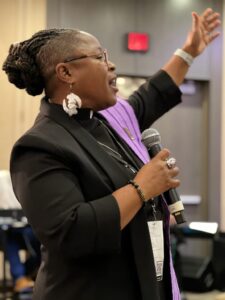
 

Like all Eden students, Gabrielle participated in the Contextual Education program, which ultimately pulled her in the direction of her post-seminary career. She began pastoring during her last year in Seminary and became the executive director of Faith and for the Sake of All, an organization that grew into Faith Health Equity Alliance for Living Sacredly (Faith HEALS). She served in that role for several years before launching her own consulting practice, where she blends her nonprofit and ministry experience to help develop people and organizations in social enterprise. She now helps “church folk” take advantage of secular tools and secular spaces to find the beauty of church culture to help them reach their goals. 

This journey led Rev. Kennedy back to Eden, where she has led and shaped the development of Eden’s Educational Partnership Program, a new initiative that expands on Eden’s hyflex model and calls alumni and community members into the educational process. 

“What does it mean to pour back into the church? That’s what Educational Partnership does. We’re helping congregations access resources that don’t drain them, resources to support the laypeople – the people who make the ministry go.” – Gabrielle Kennedy

 

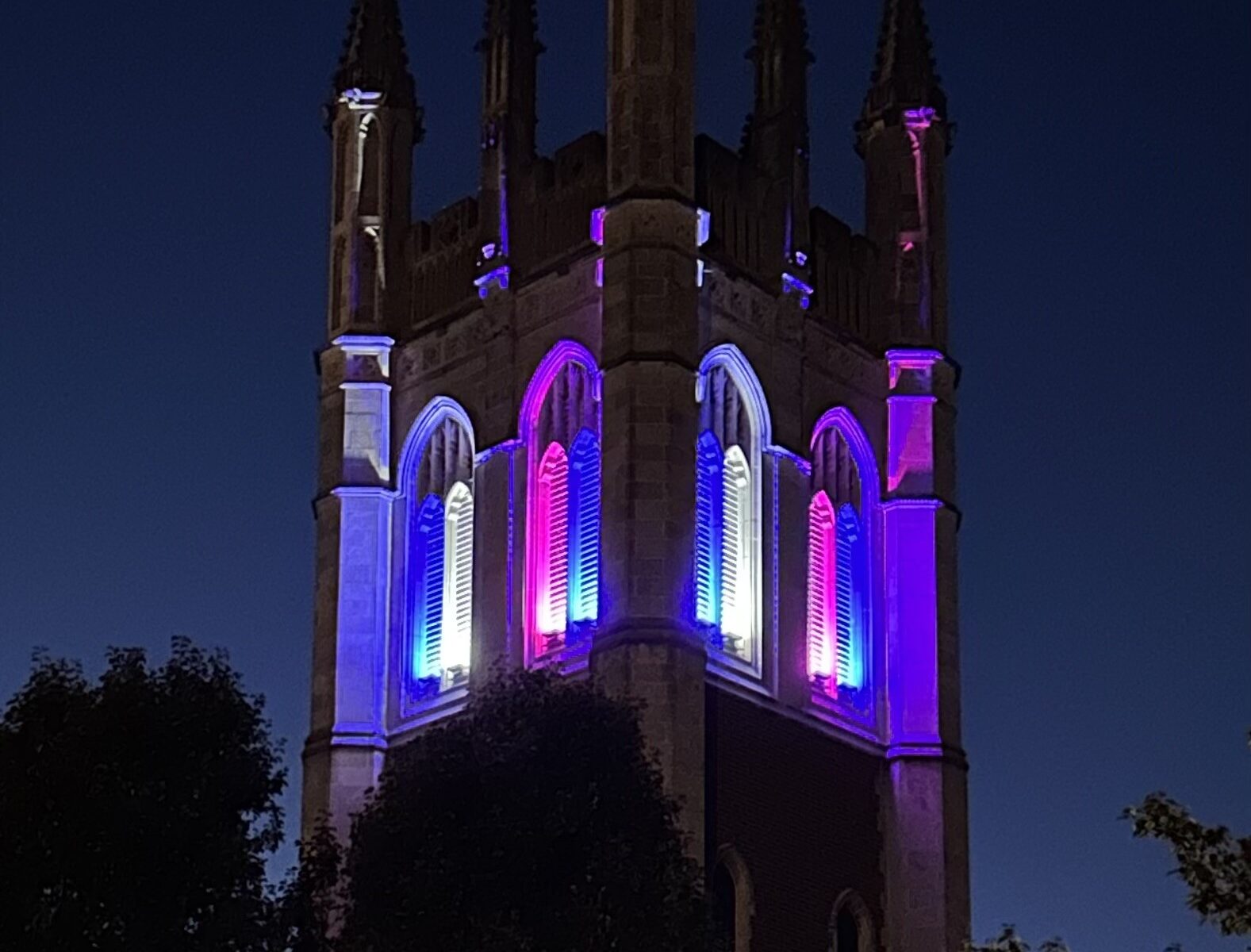
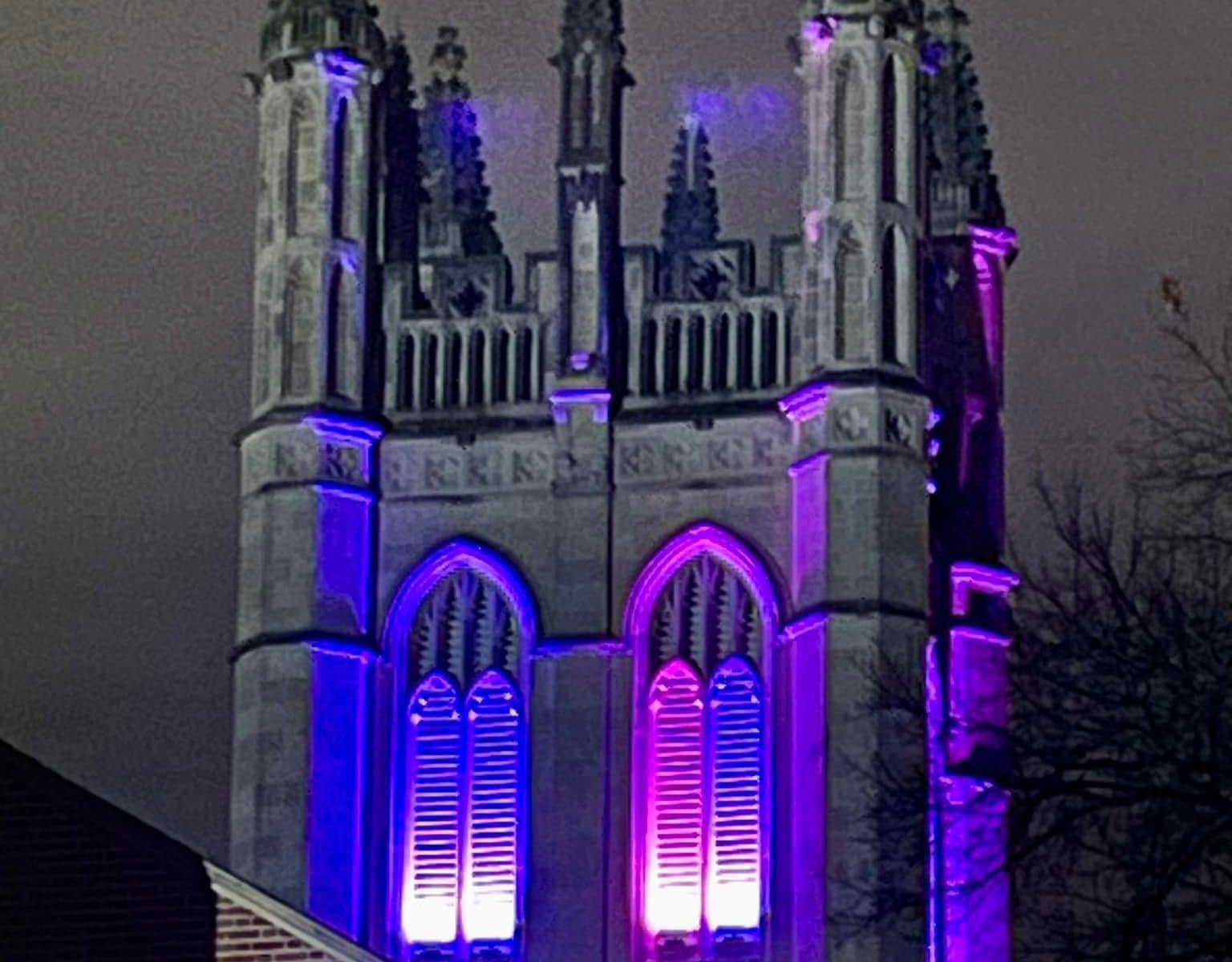
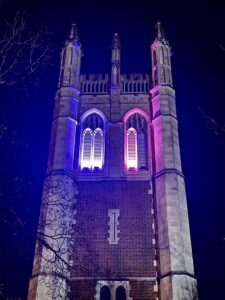
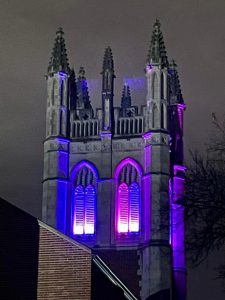
Eden’s Press Hall tower witnesses to the presence and mission of the Seminary.  During this Christian season of Advent, the tower lights shine purple and pink for the candles lit during the four weeks before Christmas. One new light is lit each week. Advent marks the new year for the Church as a period of waiting and preparation. The four lights symbolize Hope, Peace, Joy and Love that are God’s gifts.  The four weeks of Advent lead to Christmas on December 25th with its faith assurance of God-with-us. The light of Christ is fully present. Jesus is born.

Hope, Peace, Joy and Love be with you. 

Watch for more Christmas lights on December 25th!

From Presbyterian Church USA, national news service:

Eden Theological Seminary, a seminary in St. Louis affiliated with the United Church of Christ, has received a $10 million grant from Lilly Endowment Inc. to help the seminary create large-scale collaborations that will push the envelope of innovation in preparing tomorrow’s ministers, pastors, and leaders in the progressive Christian movement.

The grant is being funded through Lilly Endowment Inc.’s Pathways for Tomorrow Initiative. This initiative is designed to help theological schools across the United States and Canada as they prioritize and respond to the most pressing challenges they face as they prepare pastoral leaders for Christian congregations both now and into the future. The grant to Eden is one of 45 that Lilly Endowment made in the competitive round of the Pathways initiative. Together with Louisville Presbyterian Theological Seminary and Eastern Mennonite Seminary Union Presbyterian Seminary in Richmond, Virginia, and Charlotte, North Carolina, was also awarded a recent Lilly Foundation Inc. grant. 

Read the full article at pcusa.org.

Photo: Susannah Lohr/St. Louis Public Radio

From St. Louis Public Radio’s Story:

Eden Theological Seminary in Webster Groves recently received a $10 million grant from Lilly Endowment Inc., and leaders say the money will be used for a “Momentum for Ministry” initiative.

Eden, of the United Church of Christ Protestant denomination, plans to launch the initiative by creating the Progressive Christian Ministry System for Congregational Vitality.

That’s a long title to describe a group of people who Eden officials say will ultimately work together to prepare leaders for ministry and foster collaboration among seminaries nationwide.

Beginning next year, Eden leaders said they’ll be working with the United Theological Seminary in Minnesota, two schools of the Saskatoon Theological Union in Canada, the Memphis Theological Seminary in Tennessee and the BSK Theological Seminary in Kentucky.

Read the full story on stlpr.org.

Meet Reverend Dr. Tracy Hughes, Who Practices Local Ministry in a Global Setting

Although she was always active in her local church as a child, Tracy Hughes was at first on her way to a career in education. But then, her path took an unexpected turn. While pursuing her Master of Education from West Virginia University, Tracy volunteered for a local Presbyterian Church to organize the Junior High Youth Group, and she loved the work. Christian Educator, Susan Easton, was the first woman in ministry Tracy had ever met, and it became clear to her that she was meant to use her background in education to join in God’s work of love in the world. 

The Roots of a Global Career 

Her drive for working in a global setting led her to Belize, where she volunteered in the Peace Corps. It was there, when a fellow Peace Corps volunteer, turned to Tracy and said, “One day, we’ll be in seminary together.” At the time, Tracy couldn’t imagine how she could be right. 

A Unique Seminary Experience

Duty called Tracy home to Tiffin, Ohio when her father passed away. She spent a year helping her mother and working as Christian Education Director at Trinity United Church of Christ. Here, she began to think seriously about ordained ministry. All the local UCC pastors had gone to Eden, and so Tracy packed her bags for St. Louis. 

In the second year of her Master of Divinity program, Tracy spent her J-term shadowing the pastor at St. Peter’s United Church of Christ in Inman, KS, to learn about rural ministry. She returned to Inman, KS, population 900, the following summer to serve the congregation while the pastor was on sabbatical. 

In Systematic Theology with Professor John Riggs, Tracy got her first exposure to liberation theology. In her third year of seminary, Tracy became a “Global Mission Intern” and taught at a Global Mission Child Sponsorship School in East Jerusalem. During her time in Palestine, Tracy attended the Arabic-speaking congregation at St. George’s Cathedral under the leadership of the Right Reverend Naim Ateek. After worship each Sunday, she participated in a dialogue on Palestinian liberation theology,  where she crossed paths with Christian Peacemaker Teams, now Community Peacemaker Teams.

Here, Tracy found her call: local ministry in a global setting. And since, she has never stopped serving God by serving communities in wartorn countries around the world. She saw clearly that God stands with people experiencing injustice.  

“The clarity of my call was and still is faith-based social justice.” – Reverend Dr. Tracy Hughes

Local Ministry in a Global Setting

Her next step was to be ordained as a Mission Worker with Global Ministries to Chiapas, Mexico, where she was an ecumenical worker in the Diocese of San Cristobal de las Casa. After Chiapas, she trained with and joined the Community Peacemaker Teams to return to Palestine to stand with communities facing displacement from settler violence, and each morning accompanied children through Israeli military checkpoints on their way to school.

“Frontline peacebuilding – that’s what Jesus was doing in his day. I believe in a nonviolent Christ and I follow the way of Jesus. My ministry has always been anti-war, and pro-Kin-dom of God.” – Reverend Dr. Tracy Hughes

For the next four years, she split her time between Chiapas and Hebron, and finally joined the Christian Peacemaker Team as a full-time member in 2005. She traveled the world, accompanying local peacemakers in places of active war and conflict including Barrancabermeja, Colombia, eastern Democratic Republic of Congo and Uganda, and of course, Palestine. 

“During those years I lived in such a way to be available to answer a call to ministry anywhere in the world.” – Reverend Dr. Tracy Hughes

The Human Rights Frontier, Here at Home

Tracy returned to the Midwest and turned her attention to the rights of immigrants living in the US. She worked toward social justice at Su Casa Catholic Worker in South Chicago and BorderLinks, leading delegations studying immigration along the USA-Mexico border. In 2013, she received her Doctorate in Multicultural Ministries from Catholic Theological Union in Chicago. 

Still a reservist with Community Peacemaker Teams, Tracy is now the Lead Minister at Mountain View United Church in Aurora, Colorado. She’s been with the church for nine years. Tracy currently focuses much of her preaching on confronting White Christian Nationalism and the Israeli genocide of Palestinians.

How can we be Christian and not confront the powers and principalities of death!?” – Reverend Dr. Tracy Hughes

The ecumenical congregation has been focusing on faith-based social justice. They form deep partnerships with many local nonprofits, creating an inclusive and welcoming space for people of all faith backgrounds. They accompany immigrants seeking asylum in their communities, and provide a safe space as immigrants in Aurora continue to be unjustly targeted by ICE. Through an eighth-year process, MVUC partnered with Habitat for Humanity to build ten duplexes on church property to affordably house twenty families. They also rent space to African Leadership Group (ALG). The congregation and ALG’s newest collaboration is to start Food Connection, a food pantry in the church to support ALG immigrants families. To accommodate members of Muslim faith, they created an interfaith prayer room affectionately known as the “Mini Mosque”. In 2022, Tracy received a Lilly Clergy Renewal Grant for her sabbatical, “Building Bridges in Beloved Community” to Ghana, Senegal, and Tanzania. Visit MVUC’s website to see the full breadth of their work. 

“It is paramount to remember the  stories of the welcoming of the foreigner. There are many texts in the Bible about welcoming the stranger and caring for the oppressed.” – Reverend Dr. Tracy Hughes